The Great Meditation Retreat at Prem Nagar 1972
Devotion, Dysentery and Distress
From almost the very beginning, the Divine Light Mission history became infused with excuses, explaining aways, rationales, plausible or otherwise, and this was evident as early as November 1972 because quite simply the promises of immediate peace and bliss for premies were not true. This was exemplified by the use of the concept 'Lila.' God's games. The young guru's life included many less than reputable activities. It waas a Lila, a paradoxical, even unethical, action to teach the premies to "let go" of their concepts of how they should be and act because to live in the Grace of Guru Maharaj Ji and the flow of Knowledge transcended the Mind. These excuses and tales of 'lilas' were not exclusive to the guru himself. Premies needed many rationalisations to explain away the failure of the "Knowledge" i.e. the satsang, service and meditation, especially meditation, lifestyle in providing peaceful and harmonious lives for most premies. Behind the facade of blissful peace at satsang meetings there were countless emotional scenes in the back rooms and hallways as the dregs of the youth counterculture struggled to live an ordered life through meditation.
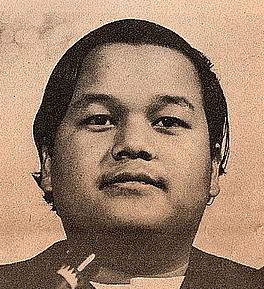 In late 1972 14-year-old Prem Rawat, then calling Himself Guru Maharaj Ji, "invited the premies outside of India to come and live with him and participate in the annual Hans Jayanti Festival which take takes place in Delhi to honor Shri Maharaj Ji. This time seven jumbo jets were needed to bring 3,500 devotees to India." This was so unusual that it was widely reported in the press, especially after charges were made of smuggling jewellery and cash. We know from David Lovejoy's memoire "Between Dark and Dark," that the early 1970s "hippie" premies in India did not slip into a regulated, meditative, drug-free lifestyle quickly and easily. Local entrepreneurs began servicing their needs not met in the ashram. When 3,500 premies with no experience of living in India arrived for this extended satsang and meditation retreat at Prem Nagar things did not go as well as hoped. Their experiences were not as blissful as promised. There was a lot of sitting on theground waiting, there were interminable Hindi satsangs, there was boredom, there was sickness, there was emotional distress. In fact, things were so bad that they were even reported in the press.
It it was awful for the premies, it was even worse for Rawat himself. He had to endure the whining of the premies for years and years:
I remember that in 1971 premies went to India. And till now, I hear their horror-stories that they have to tell: diarrhoea, throwing-up, sick, heat-strokes, waking up all of a sudden and finding a rat about a foot long, crawling on top of them. No food, no good food, and all the things that premies have to tell.

Lucy Dupertuis recalled the situation when the 3,500 Western premies spent 2 weeks "meditating" at Prem Nagar in 1972 in her ironically titled thesis: Company of Truth
Physical hardships consumed my remaining energy. 3,500 Westerners were crowded into army tents on a few acres of dusty land in Hardwar, North India in late November, when the sun still roasts at midday but the nights nearly freeze. Twice a day we all stood in line for an hour or two waiting to eat. Then there were long tramps to the latrines, to the Ganges to squat and swish dirty clothes about in the water, and to the outdoor "showers," where women had to wash fully clothed (in the tradition of Indian modesty) from sporadically flowing taps. I hardly talked to anyone except a few friends from California who seemed to moan in their sleeping bags sick with dysentary for the entire month. The rest of the time when I was not wandering aimlessly among the market stalls of "Divine Sales," I sat quietly in meditation along the banks of the Ganges, or listened to "satsangs" (spiritual discourses) by the Guru and his "Mahatmas," or tried to sneak up to the Guru's rooms on the ashram roof, past ever-present guards, in hopes of "darshan" - a glimpse of him.
Several disconfirming events did not shake my initial enthusiasm. The friends I had come with gradually got fed up, and some other acquaintances from California left for Nepal in disgust. Then the reputation-conscious Mission, worried about customs,2 offended my counter-culture sensibilities by conducting a heavy-handed "dope raid" - in my tent among others - to confiscate hashish. Another time I even left the ashram with my parents, coincidentally in India on business, for a visit to New Delhi.3 For a day I enjoyed the warmth, food, and cleanliness of hotel life, but then began longing for the ashram's "spiritual vibrations" and soon returned eagerly to the dusty little corner of my tent and the prospect of my Guru's "darshan."
In November 1972 2,500 young foreigners recently initiated arrived at Prem Nagar. Things got so bad they were even reported in the straight press
"He's having trouble with his liver," Dr. Edward Hanzelik of Brooklyn, one of the camp physicians, said. As for the guru's followers, "We've been treating a lot of dysentery and colds," Hanzelik said, "and there have been some emotional problems." He said the problems occurred "mostly in people who want to get closer to the perfect Knowledge. When they are not close to the Knowledge, they get depressed and unhappy," he said.
Miss Jean Obert, 23, of Villa Grande, Calif., said "it's been good and bad. The bad things have been my own little freak-outs." She explained that she had at times been depressed when she did not feel in complete tune with Maharaj Ji.
Hanzelik is long-term devotee and personal physican to Rawat and Secretary of The Prem Rawat Foundation in 2012. His idea of treatment was to tell them they needed "More faith, brother, more faith". He obviously did not see the irony in the Perfect Knowledge creating emotional problems.

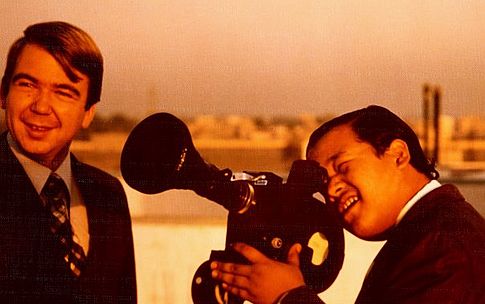 Jacques Sandoz was making an adulatory film about Rawat so he lived on the roof of the ashram and had privileged treatment. Down below it looked like a prisoner camp!
In Prem Nagar ashram (Hardwar) the situation was not at all as harmonious as in 1971, because it was overcrowded and the installations were totally unsufficient. Followed a serious health problem and many illnesses due to lack of hygiene and malnutrition. Additionally the ashram security was searching luggages for hashish and stopping people to leave the precinct. And to top all, Maharaj-ji was not much there. I was personnally not affected as I lived on the roof of the ashram and had a privileged treatment, but we were far away from an Indian spiritual journey. For many it was more like a prisoner camp!
Argosy magazine even sent a reporter to Prem Nagar:
In September of 1972, I was assigned to cover Maharaj Ji's return to Mother India. The Divine Light people had rented 18 jet planes to ferry some 3,500 premies to India to be on hand for the Guru's touch-down, a kind of modern replay of the old Ark trick. Maharaj Ji's return was to signal the beginning of a five-day celebration at the Ram Lila grounds, a dusty No-Man's Land that separates "Old" Delhi from "New" Delhi. The flight was long and uneventful--except for one thing. DLM officers came marching down the aisles collecting all the money and valuables the Premies were carrying. Reasons were given. "It's the Perfect Master's will, man," was the one I heard most often. Nonetheless, a number of noses began sniffing the air. Their faith was getting a test from their common sense.
The Guru's faithful ran into problems as soon as the plane had landed in New Delhi. Joan Apter-a super Premie and one of the five original U.S. converts-had her suitcase opened by Customs inspectors. It contained $28,000 in cash, travelers checks and jewelry. When the officials had finished with the rest of the bags, the figure stood at $65,000. Indira Gandhi's government had a stroke. Bringing that kind of wealth into the country-undeclared-was deemed to be smuggling, and a minor international incident was under way. The Customs people confiscated everything in sight, including Maharaj Ji's passport. Indira Gandhi flew to New Delhi to hold a special session with her ministers to decide whether or not to clap the Perfect Master in jail. The Holy Family, holding a special session of their own, decided that they had had all they wanted of New Delhi. They loaded all the faithful aboard buses and trucked them the 100 miles to Hardwar.
Final destination turned out to be a group of white-stucco buildings, ringed with barbed-wire-topped fence. It was owned by Maharaj Ji and the Holy Family. But by now the first-aid tents were jammed with people who were suffering from high fevers and a racking dysentery. Forced to eat food that was produced on land fertilized with fresh water-buffalo manure, they fell like flies in a Raid commercial. And, since they had no money to buy food, they were helpless to change their diets. A minimovement began to get some money back so that the sicker people could be moved back to New Delhi for proper medical attention (the Premie doctor's idea of treatment was to tell them they needed "More faith, brother, more faith"). It was at about that time that the DLM officers made an announcement. "According to Divine will, all money and valuables left for safe keeping with DLM personnel, will be donated to the Divine Treasury." At that point, a lot of people saw the "knowledge." To this day, the Indian government is still holding on to the suitcases, and the Guru must post a substantial bond any time he decides to leave the country. -EB

This memoire is from a hard working and dedicated Dutch premie. Two years later he got the call to go up to Denver and join the inner circle around Rawat.
The first time in my life I was in an airplane, was about half a year after I got that half a shelf and a place to roll out my sleeping bag at the ashram. Just like a few thousand other followers from Europe and the United States I was in one of the five chartered Boeing-747's, on my way to a big festival in New Delhi to see the guru for the first time in person and then stay at his ashram in Hardwar on the Ganges for a few weeks. It was hot, there on that concrete plain right next to Delhi Airport where we were told to assemble and wait. Maharaj ji himself was going to welcome us, a whisper said. After about four hours in the burning sun, it was clear that we weren't ready for that. Too little meditation and too much 'mind and illusion', no doubt. So we left in rented buses to a campsite that the Indian followers had put up on a dusty plain outside Delhi. The tents were basically wooden poles affixed with ropes. On those poles sat a roof of colored pieces of fabric. The sides were open for wind, dust and warmth. Next to the campsite were the festival grounds - a wide open field with a stage at the far end that had microphones on it, a throne decorated with flowers for the guru and embroidered pillows for the mahatma's. After his father's death, Maharaj ji was chosen to succeed him as guru and religious teacher at the age of six. A daunting position, because the Divine Light Mission of his father had almost ten thousand followers in India. A few thousand of them sat on the festival grounds in red, purple, yellow and golden saris and white 'Indian pajamas', that were also quite popular among the Western followers. They had a red dot on their foreheads, put flower leaves on each other's heads and sang songs that seemed to turn around over and over in the same intonation. On the stage the mahatma's took turns giving 'satsang': an improvised speech, directly from the meditative experience, about the virtues of the holy master and his divine knowledge bringing enlightenment for the true devotee. Again and again similar words in repeated circles, just like the songs. The microphones cracked, the followers sang, the sun burned and the mahatma's praised our luck because the road to eternal bliss was right in front if us. For three days without end, sometimes in English but mostly in Hindi.
Prem Nagar ashram in Hardwar, facing mother Ganges and the foothills of the Himalaya. The few Western followers that had been there, like the American with hepatitis-B on my ward in the Onze Lieve Vrouwe Gasthuis, pronounced the name with shiny eyes and covered in silence. The holiest place on earth. But not quite built for receiving three thousand guests. Actually the ashram was basically a bare piece of open field made of tamped down clay, with a rusty fence around it and a small lone building in the middle. Just outside the fence was a small vegetable garden. I saw a few mahatmas, who were driven around with high esteem in luxury cars and accommodated with soft sheets and long pile carpet back home, squatting on the ground to remove weeds between bushes with melons on it. The loam building on the ashram grounds consisted of two rows of small sleeping quarters (a door, a window frame, no glass, and a wooden bed). For the mahatma's. Perpedicular and at the one side there was a kitchen, at the other were two toilets and an open air sink without a tap. Next to the building was a space for satsang gatherings, made in the same style as the campsite in Delhi: a roof made of pieces of fabric on poles. Underneath was a small stage. Other than that the ashram consisted of wind and dust. For the three thousand guests from America, Europe and Australia a campsite was built on a small bare field next to the ashram grounds. It was made up of about ten large tent roofs constructed from pieces of fabric, with open spaces underneath where everyone coming from the buses tried to find a spot with as little dust and sun as possible to roll out his sleeping bag. Next to the campsite, on the way to the river, were two rows of canvas cabins, with open fronts and backs, built on top of ditches where every now and then water from the river would run through. The toilets. One row for the 'brothers' and one row for the 'sisters'. Behind that: mother Ganges, also the place where everyone had to make a sincere effort to keep himself and his clothes sort of clean.
That, the food (scooped from large buckets on a hold out chapati - 'More dahl brother? More rice brother?'), the heat, the toilet-ditches that soon didn't flush at all anymore and aimless hanging around in the ashram dust, caused the number of sick persons to increase by dozens each day. Andy, an American follower with a half-finished medical education, did daily consultations in one of the tents. My job as 'experienced' nurse's aid was to go visit the followers in their sleeping tents that were too sick to attend these consultations. Whereupon there was not much I could do. Almost everyone was sick with diarrhea and most of them had already given up the hopeless run to the ditches. When I could find anything clean, I put it on them. I brought some drinking water that I could, with a lot of effort, extract from the kitchen. And gave the number of their tent to doctor Andy. Who promised to drop by as soon as he had a moment. Other than that practically nothing happened in the ashram for four long weeks. Sometimes a mahatma visited the open space alongside the loam house to give satsang. And every day the rumor spread that Maharaj ji would come. Which didn't happen. We apparently lacked devotion. A steadily increasing number of taxis and rickshaws appeared in front of the iron ashram fence to drive followers that were, for the moment, fed up with the guidelines of the guru to Hardwar, chai and chillum. It convinced me that I had to be strong. This was a test. So I meditated in the mornings with the mahatma's, joined them singing the praises of the divine incarnation that was among us, listened to their endlessly repeated satsangs ('we are bery lucky souls') and saw my diarrhea patients.
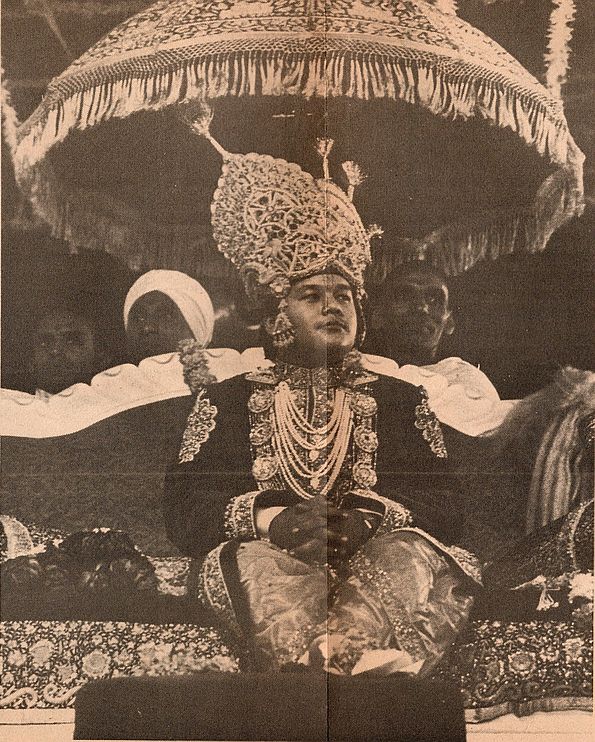
Paul Drescher, rebelling against his middle class straight-A Jewish boyhood, was blasted into Divine Light by Mahatama Rajeshwar's fingertip as he recalled 50 years later. However, his premie days were more like his experiences in Prem Nagar than in his marathon Knowledge Session:
All summer and fall of 1972 I worked and saved money for the trip to India that November. Devotees from all over the world flew into Delhi on six charted Jumbo jets and were bussed north to the DLM compound in Hardwar, at the foot of the Himalayas. There, three thousand Western disciples were housed in tents and lined up twice a day for a plate of rice and dal. A hot cup of chai in the morning helped take away the morning chill. Most Westerners were hippies from white, upper-middle class families and were used to camping, but this was different. Open pit latrines, with cubicles made from black plastic, lined the edge of the field. The stench was overpowering. There was no toilet paper, we were told to use a leaf. Fresh running water was scarce. Soon people started getting sick with dysentery. For a full week it seemed that I did nothing but run back and forth to the latrines. Nearly everybody was sick, and I almost shit my pants several times waiting for a latrine to open up. There was no medicine for the mass of devotees, so treatment would have to wait until I got home. Not wanting to spend hours a day in the latrine, I reduced my intake of food. I lost five pounds in twelve days while in India.
I returned home to my parents in Port Huron, Michigan to get treatment for dysentery and figure out my next move. With antibiotics the dysentery cleared up in a week. Although 10,000 miles separated me from my guru my mind and heart were nonetheless filled with love for him. I felt duty bound to serve him and help him bring about peace on earth. My parents thought I was cukoo, but that didn't matter to me. I knew their worries were completely unfounded and ridiculous.
Honcho premie Brad Griffin recalled lying in a "tent looking up at the canvas, suffering dysentery, swatting flies and fantasizing about the future."


Similar problems had occurred in 1971 when only 25 to 30 Western premies attended
As the car pulled away from the gate I looked up at the sign over the ashram gate that said Premnagar (City of Bliss). It sounded familiar and I had a sinking feeling. My worst suspicion was confirmed as I walked down the path to the ashram's front door. Fate had brought me once again to the feet of the child Guru I had last seen in London. He had just arrived on a jumbo jet with three hundred westerners he called "Premies." I would just have dinner and get an early start in the morning. The ashram, used to hosting only small groups of Indians, had no idea how to deal with that many people, especially westerners. The only running water was a single spigot and the toilets had stopped working. The field behind the ashram had become the latrine. In rural India, where toilets and privacy are unheard of, people are used to relieving themselves in public; but for westerners this was a shock that took a while to assimilate. Cooking was also done outside and flies swarmed happily back and forth from field to the food. Within twenty-four hours nearly everyone had dysentery. However, we were still expected to help prepare meals and sweep the temple grounds, which they called Karma Yoga.
In the morning I awoke with a burning fever. Having slept on the cement floor of the temple, I was powerless to avoid the darshan of Guru Maharajji. This time he sat in the midst of an ornately decorated altar on a throne several feet above the audience. It was just before Christmas and the Hindu shrine was decorated with twinkling, colored lights, which appealed to the westerners missing the holiday festivities at home. I was shocked to hear Maharajji boast, "Why are you thinking about Jesus? Forget about Him, because I am that same being here now." Instead of leaving in the morning as planned, I lay on the cement floor for days, burning with fever, and moving in and out of delirium. The Hindu Gods in their various peaceful and wrathful forms looked down on me from the shrine, gradually merging into a blur of flashing colored lights. Twice a day the child Guru gave darshan, ranting on and on about his greatness, and I began to wonder if, in the midst of this increasing sense of unreality, I had been carried off to one of the astral hells by the asuras (demons) depicted in pictures on the shrine. "The reason you are sick," a devotee said one day, looking down on me with obvious displeasure, "is because you still haven't accepted Guru Maharajji as God."
Official reports of the 1972 Jumbo meditation retreat were published afterwards. They tell a very different story even though some of the authors had been there. There has been one directive overriding all others in the world of Prem Rawat. Everything must be shown in a super positive light.
In 1972, a total of 3,300 devotees from all seven continents gathered together in India to celebrate Hans Jayanti. Even the Arya Samaj came to sit in wonder and listen. It was obvious that something which had never happened before was taking place now, under the guidance of Guru Maharaj Ji.
As each Jumbo full of Guru Maharaj Ji's disciples arrived, the "citizens" were absorbed into the smoothly functioning organization of the "town." Sanitation crews, kitchen workers, peace officers and town councilmen were established on a voluntary basis. The town was moved twice to follow the Hans Jayanti Program - from Punjabi Bagh Ashram to Delhi, and from Delhi to Prem Nagar. It was demolished and resurrected in one day each time. If you have ever been camping with even a family of six, you know that that is no easy task. In India, considering the transportation system and the tools you have to work with, it's impossible.
At Hans Jayanti, 1972, Guru Maharaj Ji's disciples created an efficient and peaceful international community. All the barriers that separate a man from his brothers were overcome. For everyone there, the realization that the Knowledge made world peace possible was not surprising. They had already witnessed its power to bring peace to their own lives. From Japan, Australia, New Zealand, Africa, South America, the United States, England, and all of Europe, disciples united to create a living example of harmony. World peace had begun.
Ginda Lasseigne is a very successful true believer premie and has overseen the "Global Teams" that are responsible for supporting blah blah blah and blah blah blah for decades, been Rawat's personal assistant and was instrumental in creating the auto-Knowledge Mac system that replaced the direct human transmission by a Mahatma of the grace of Guru Maharaj Ji that he received, that Rawat claimed was essential. His introduction and initiation into Knowledge was in India in 1972.
I first learned about Prem while traveling in South Asia. In 1972, during a trip to India, I met someone who told me about Prem Rawat. He was a fellow traveler who shared his personal experiences he'd had with Prem and something called "Knowledge." In our conversation, I remember feeling a sense of awakening and inspiration to learn more about "Knowledge" and what Prem was offering. It was such a compelling experience that I wanted to follow up. From this encounter I learned that Prem had a facility in Haridwar, in the foothills of the Himalayas, where instruction on the techniques of Knowledge was available. After a change of travel plans, I made my way to Prem Nagar, where I was welcomed and invited to stay to learn more about "Knowledge." For the next month or so, my time at Prem Nagar was spent helping in various service opportunities, including bookbinding and gardening activities. I was inspired by those who had already received the techniques of Knowledge.
My opportunity to learn the techniques arrived in July 1972 when I attended a Knowledge Session with several other people at Punjabi Bagh, Delhi. After the session, I returned to Prem Nagar and stayed for another four months, participating in various activities and helping to prepare for the Hans Jayanti Event scheduled for November of 1972. The time spent at Prem Nagar was a beautiful beginning in my practice of this gift of Knowledge. I have many memorable early experiences providing simple services at the ashram.
It is normal for premies to use current terminology to discuss events in the past when it was different, either deliberately or thoughtlessly. In 1972 Rawat called himself Guru Maharaj Ji and he was not known as Prem Rawat until around 2010. Prior to the late 1980s, we have no record of Guru Maharaj Ji ever using the phrase "gift of Knowledge." He did not have a 'facility,' he had an 'ashram'. People did not "receive the techniques of Knowledge," because there is no record of Guru Maharaj Ji ever saying "techniques of Knowledge." Knowledge was revealed by Mahatmas who were "Great Souls," the only persons authorised by Maharaji to initiate premies in a Knowledge Session so that they could be infused with His Grace.